Bicycle Measurements Guide: Finding Your Perfect Fit
Establishing the correct bike size is crucial when purchasing a new bicycle. While adjustments are possible, starting with the right fit enhances comfort and performance.
Bike sizing isn’t a one-size-fits-all equation; it’s a nuanced process designed to connect you with a bicycle that feels comfortable, efficient, and responsive. A properly sized bike minimizes strain, maximizes power transfer, and ultimately enhances your riding experience. Ignoring proper sizing can lead to discomfort, injury, and a general dislike for cycling.
Several key measurements come into play, extending beyond simply frame size. These include inseam, torso length, and arm reach, all working together to determine the ideal geometry for your body. Understanding these measurements allows for a more informed decision, whether you’re purchasing online or visiting a local bike shop.
This guide will walk you through the essential measurements and adjustments, covering various bike types. Remember, a little time invested in finding the right fit will pay dividends in countless enjoyable miles. Don’t hesitate to seek professional assistance from a bike fitter for personalized guidance.
Why Accurate Measurements Matter
Inaccurate bicycle measurements can significantly impact your riding experience and physical well-being. A bike that’s too large or too small forces your body into unnatural positions, leading to discomfort, fatigue, and potentially chronic injuries like knee pain, back strain, or wrist problems.
Precise measurements ensure optimal biomechanics, allowing for efficient power transfer from your legs to the pedals. This translates to faster speeds, longer rides, and reduced energy expenditure. A well-fitted bike also improves handling and control, boosting confidence on various terrains.
Furthermore, accurate sizing prevents unnecessary wear and tear on your body; By minimizing stress on joints and muscles, you can enjoy cycling for years to come. Investing time in precise measurements is an investment in your health, performance, and overall enjoyment of the sport. Don’t underestimate the power of a proper fit!

Key Bicycle Measurements

Understanding frame size, top tube length, seat tube length, head tube length, and chainstay length is vital. These dimensions define a bike’s geometry and fit.
Frame Size: The Foundation of Fit
Frame size is arguably the most important measurement when selecting a bicycle. It directly impacts your riding position, comfort, and overall control. Traditionally, frame size is measured in inches or centimeters, referring to the distance from the center of the bottom bracket to the top of the seat tube. However, manufacturers are increasingly using size designations like Small, Medium, and Large, which can vary between brands.
Choosing the correct frame size prevents discomfort, reduces the risk of injury, and maximizes pedaling efficiency. A frame that’s too large can lead to overextension and difficulty reaching the handlebars, while a frame that’s too small can cause a cramped riding position and knee strain. It’s essential to consult a sizing chart specific to the bike brand and type you’re considering, and ideally, test ride several sizes to find the perfect fit. Remember that frame size is just the starting point; other measurements, like reach and stack, also play a crucial role in achieving optimal bike fit.
Top Tube Length: Reach and Comfort
Top tube length significantly influences your reach – the distance from the saddle to the handlebars. This measurement directly affects your riding posture and comfort level. A longer top tube generally results in a more stretched-out, aerodynamic position, favored by experienced riders and racers. Conversely, a shorter top tube promotes a more upright and relaxed posture, ideal for recreational riding and commuting.
Determining the appropriate top tube length involves considering your torso length, arm reach, and flexibility. Riders with longer torsos and arms typically benefit from a longer top tube, while those with shorter builds may prefer a shorter one. Modern bike geometry often incorporates “reach” as a more precise measurement than top tube length, accounting for head tube angle and stem length. Fine-tuning reach is often achieved through stem adjustments, but starting with a properly sized top tube is fundamental for a comfortable and efficient ride.
Seat Tube Length: Standover Height
Seat tube length is a traditional measurement, running from the center of the bottom bracket to the top of the seat tube. It’s historically used for determining frame size, but modern sizing often prioritizes reach and stack. However, seat tube length is crucial for calculating standover height – the clearance between the top tube and your crotch when standing over the bike.
Adequate standover height is vital for safety. You should have at least 1-2 inches of clearance (more for mountain bikes) to prevent injury when dismounting quickly. Incorrect standover height can lead to discomfort and potential accidents. While seat tube length provides a starting point, it’s essential to physically check standover height before purchasing. Consider the type of riding you’ll be doing; mountain bikes require greater clearance for navigating technical terrain. Proper standover height ensures confidence and control.
Head Tube Length: Handling and Position
Head tube length, measured from the headset to the top of the head tube, significantly impacts a bike’s handling and your riding position. A shorter head tube generally results in a more aggressive, aerodynamic position, favored by racers and those seeking responsive steering. Conversely, a longer head tube promotes a more upright, comfortable posture, ideal for endurance riding and casual cyclists.
Head tube length influences stack height – the vertical distance from the bottom bracket to the top of the head tube. Stack, combined with reach, determines overall fit. Adjusting stem length and headset spacers can fine-tune handlebar height and reach, but the head tube length establishes the fundamental geometry. Consider your flexibility and riding style when evaluating head tube length. A longer head tube reduces strain on the back and neck, while a shorter one enhances power transfer and control.
Chainstay Length: Stability and Responsiveness
Chainstay length, the distance from the bottom bracket to the rear axle, profoundly affects a bicycle’s handling characteristics. Shorter chainstays create a more responsive and agile feel, making the bike quicker to accelerate and maneuver, often preferred for racing and aggressive riding styles. However, this can sometimes compromise stability, particularly at higher speeds.
Longer chainstays, conversely, enhance stability and provide a smoother ride, absorbing bumps more effectively. They also offer increased tire clearance, beneficial for gravel or off-road cycling. The trade-off is reduced agility and a slightly less direct power transfer. Chainstay length interacts with other frame geometry elements, like head tube angle, to determine the overall handling balance. Consider the terrain you’ll primarily ride on and your desired riding experience when assessing chainstay length – prioritizing responsiveness or stability.

Measuring Yourself for a Bike
Accurate self-measurement is key to finding the right bike size. Key measurements include standover height, inseam, torso length, and arm reach for optimal fit.
Standover Height Measurement
Standover height is a fundamental measurement determining if a bike’s frame is the right size for you. To measure, stand with your feet flat on the ground and straddle the bike’s top tube. There should be a minimum of 1-2 inches (2.5-5 cm) of clearance between the top tube and your crotch.
This clearance is vital for safety, allowing you to dismount quickly in an emergency without injury. For mountain bikes, a bit more clearance is recommended due to the more dynamic riding style and potential for unexpected maneuvers. Conversely, some road bikes may have less standover height, prioritizing aerodynamics and efficiency.
Proper standover height prevents discomfort and potential injury. If the standover height is too low, you risk hitting the top tube during dismounts or in challenging terrain. If it’s too high, it can be difficult to control the bike, especially during slow-speed maneuvers. Always prioritize safety and comfort when assessing standover height.
Inseam Measurement: Determining Frame Size
Your inseam is a key measurement used to estimate your ideal bicycle frame size. Stand with your back against a wall, wearing cycling shoes. Place a book between your legs, mimicking a saddle, and push it firmly up until it contacts your sit bones.
Have someone measure the distance from the top of the book to the floor. This measurement, in inches or centimeters, is your inseam. Multiply your inseam by 0.65 to get a rough estimate of your appropriate frame size (for road bikes). Mountain bike frame sizing uses a different multiplier, typically around 0.66-0.68, depending on the style of riding.
Remember this is a starting point; Frame size charts vary between manufacturers and bike types. Consider your riding style and flexibility when selecting a frame. A professional bike fit is always recommended for optimal comfort and performance, refining the initial size estimate based on individual biomechanics.
Torso Length: Reach Considerations
Torso length significantly impacts reach – the distance from the saddle to the handlebars. A longer torso generally requires a longer reach, while a shorter torso benefits from a more compact position. To measure, sit upright against a wall, and have someone measure from the top of your pubic bone to the sternal notch (the dip at the base of your throat).


This measurement, combined with your arm length, helps determine the appropriate stem length and handlebar reach. A proper reach prevents overextension or a cramped posture, reducing strain on your back and shoulders; Consider your flexibility; less flexible riders may prefer a shorter reach.
Reach is often adjusted with stem length and handlebar selection. A longer stem increases reach, while a shorter stem decreases it. Handlebars with different reach and drop also influence the overall riding position. A professional bike fit will precisely determine your optimal reach for comfort and efficiency.
Arm Length: Handlebar Reach
Arm length is a critical factor in determining the correct handlebar reach and overall bike fit. It influences your ability to comfortably control the bike and maintain an efficient riding position. To measure, stand with your arms extended horizontally, as if reaching for handlebars. Have someone measure from the bony prominence on your shoulder (acromion process) to the center of your closed fist.
This measurement, alongside torso length, dictates the ideal distance between the saddle and handlebars. Longer arms generally accommodate a longer reach, while shorter arms require a more compact setup. An improper reach can lead to shoulder pain, neck strain, and reduced power transfer.
Adjustments to handlebar reach are made through stem length and handlebar selection. A longer stem increases reach, and vice versa. Handlebar width and shape also play a role. A professional bike fit will accurately assess your arm length and recommend the optimal handlebar setup for your body and riding style.

Bike Fit Components & Adjustments
Fine-tuning bike fit involves adjusting components like saddle height, fore/aft position, handlebar height, and stem length to optimize comfort, efficiency, and control.
Saddle Height: Leg Extension and Efficiency
Proper saddle height is paramount for efficient pedaling and preventing injury. When the pedal is at its lowest point, your leg should be almost fully extended, with a slight bend remaining at the knee – typically around 25-35 degrees. This ensures maximum power transfer with each stroke.
A common method for initial adjustment involves the heel-on-pedal technique. Sit on the bike and place your heel on the pedal at the bottom of the stroke. Your leg should be straight. Then, when you move your foot to the ball of your foot on the pedal, your knee will have that slight bend.
Too low a saddle height can lead to knee pain and reduced power, while too high a saddle can cause rocking hips and strain on the lower back. Small adjustments – a few millimeters at a time – are best, followed by test rides to assess comfort and performance. Consider professional bike fitting for precise optimization.
Saddle Fore/Aft Position: Balance and Power
The saddle’s fore/aft (horizontal) position significantly impacts balance, power delivery, and comfort. Finding the optimal position involves aligning your knee with the pedal spindle when the crank arms are horizontal; This ensures efficient muscle engagement and minimizes stress on joints.
A forward saddle position generally favors more aggressive riding styles and emphasizes quadriceps engagement, while a rearward position promotes a more relaxed posture and utilizes the glutes and hamstrings more effectively.
A simple method to check this is using a plumb bob dropped from the bony part of your knee. It should ideally fall directly over the pedal spindle. Adjustments should be made in small increments, and test rides are crucial to assess how the change affects your pedaling efficiency and overall feel; Professional bike fitters utilize advanced tools for precise saddle positioning.
Handlebar Height: Comfort and Control
Handlebar height dramatically influences your riding posture, comfort, and control. Lower handlebars promote a more aerodynamic and aggressive position, favored by racers and performance-oriented cyclists. However, this position requires greater core strength and flexibility.
Higher handlebars offer a more upright and relaxed posture, prioritizing comfort and visibility, ideal for recreational riding or commuting. A higher position reduces strain on the back and neck but may decrease aerodynamic efficiency.
Finding the right height involves balancing these factors. Generally, beginners or those with flexibility limitations benefit from higher handlebars. Adjustments are typically made by changing the stem length or using spacers under the stem. Small adjustments can make a significant difference; test rides are essential to find the sweet spot between comfort and control.
Stem Length: Reach Fine-Tuning
The stem length is a critical component for fine-tuning your reach – the distance from the saddle to the handlebars. It’s a relatively inexpensive way to adjust bike fit without replacing the entire frame.
A shorter stem brings the handlebars closer, creating a more upright and maneuverable position, often preferred for technical terrain or riders seeking increased control. Conversely, a longer stem extends your reach, promoting a more aerodynamic and stable ride, favored by road cyclists.
Determining the correct stem length depends on your torso length, arm reach, and riding style. Signs of an incorrect stem length include shoulder pain, back strain, or difficulty reaching the handlebars comfortably. Small adjustments (10-20mm) can significantly impact handling and comfort. Professional bike fitting is recommended for optimal results.

Different Bike Types & Sizing
Bike sizing varies across types – road, mountain, gravel, and hybrid. Each discipline prioritizes different geometries and fit characteristics for optimal performance and rider comfort.
Road Bike Sizing
Road bike sizing traditionally focuses on frame size, often measured in centimeters or inches, corresponding to rider height. However, relying solely on height can be misleading. A more accurate approach considers inseam length alongside torso and arm measurements.
Generally, road bikes aim for a more aggressive, aerodynamic position. This translates to a longer reach and lower handlebars. Standover height is less critical on road bikes compared to mountain bikes, allowing for a slightly higher top tube.
Manufacturers often provide sizing charts, but these are starting points. Professional bike fits are highly recommended to fine-tune the position for optimal power transfer, comfort, and injury prevention. Key measurements include effective top tube length, seat tube length, and stem length, all adjusted to achieve the ideal riding posture. Consider the type of road riding you’ll be doing – endurance, racing, or recreational – as this influences the preferred fit.
Mountain Bike Sizing
Mountain bike sizing prioritizes standover height and reach, crucial for maneuverability on technical terrain. Unlike road bikes, a generous amount of standover clearance is essential to prevent injury during dismounts and navigating obstacles. Frame sizes are typically measured in inches (small, medium, large, etc.) rather than centimeters.
Reach, determined by top tube length, influences the bike’s handling characteristics. Longer reach provides more stability at high speeds, while shorter reach enhances agility. Modern mountain bike geometry trends towards longer reach and slacker head tube angles for improved descending capabilities.
Inseam measurement is vital for determining appropriate standover height. Consider the type of mountain biking – cross-country, trail, enduro, or downhill – as each discipline demands a slightly different fit. A professional bike fit ensures optimal control, comfort, and efficiency on the trails, minimizing fatigue and maximizing performance.
Gravel Bike Sizing
Gravel bike sizing blends elements of road and mountain bike fit philosophies, aiming for versatility across varied terrains. These bikes often feature a slightly more relaxed geometry than road bikes, prioritizing comfort and stability on rough surfaces. Frame size is typically determined using a combination of height and inseam measurements, similar to road bikes.
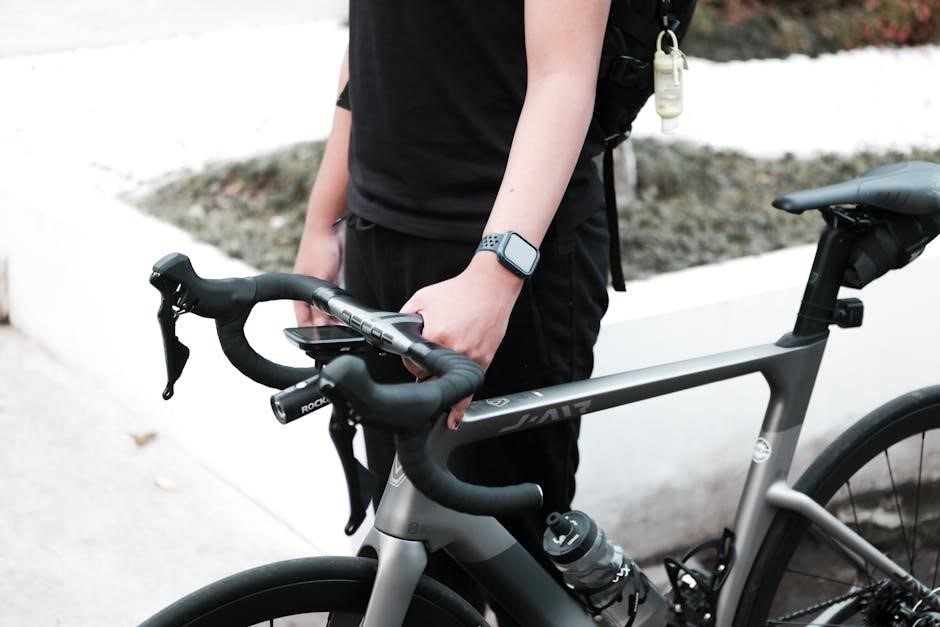
However, reach becomes particularly important on gravel bikes, influencing handling and comfort during long rides. A longer reach provides a more stable and controlled ride, while a shorter reach offers quicker steering. Consider the type of gravel riding you plan to do – fast gravel roads, rough trails, or a mix – when determining the ideal reach.
Pay attention to stack height, which affects handlebar position and overall comfort. A professional bike fit is highly recommended to fine-tune the fit and ensure optimal performance and enjoyment on gravel roads.
Hybrid Bike Sizing
Hybrid bikes are designed for versatility, blending features of road and mountain bikes, and their sizing reflects this adaptability. Generally, hybrid bike sizing focuses on providing a comfortable, upright riding position suitable for commuting, recreational riding, and light trails; Frame size is typically determined by rider height, with manufacturers often providing sizing charts.
However, inseam measurement is also crucial for ensuring proper standover clearance and pedaling efficiency. Unlike aggressive road bike fits, hybrid bikes prioritize comfort, so a slightly smaller frame size might be preferable for increased maneuverability and ease of mounting/dismounting.
Stem length and handlebar height are key adjustment points for fine-tuning the fit. A shorter stem and higher handlebars promote a more upright posture, while a longer stem and lower handlebars offer a more stretched-out position. Consider your riding style and intended use when making these adjustments.